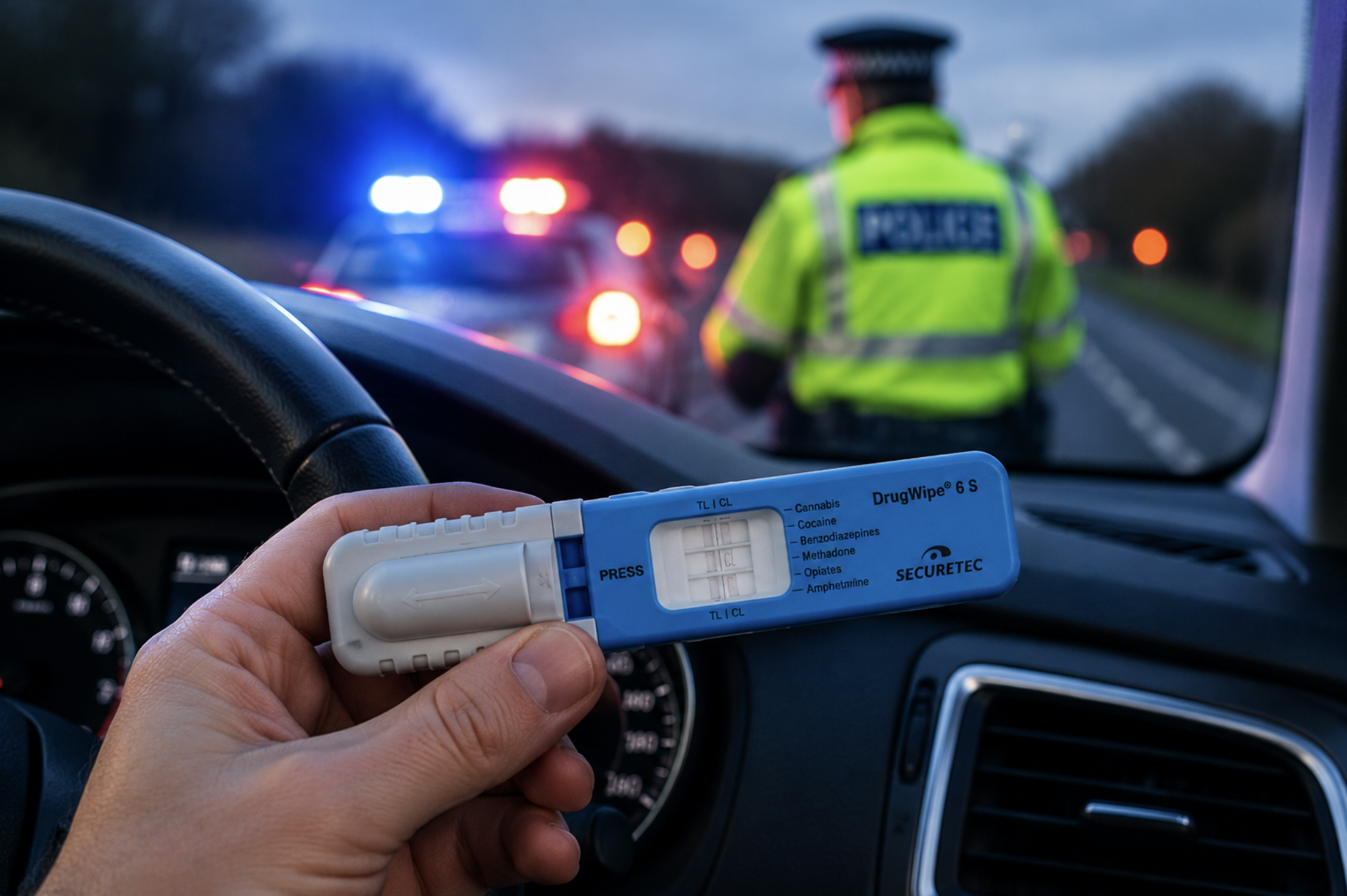
Seeing two lines appear on a roadside drug wipe is the moment many drivers assume the case is over.
It isn’t.
Police Scotland’s roadside DrugWipe tests are screening devices. They can give an immediate indication of cannabis or cocaine, but a positive roadside result is followed by arrest and aconfirmatory blood test at the police station. The blood sample is then analysed in a laboratory before a prosecution under the specified drug-driving limits can properly be considered. Police Scotland explains the roadside testing process here.
For somebody sitting at home afterwards convinced that a roadside swab has already cost them their licence, that is worth understanding.
The roadside wipe and the offence are not the same thing
Section 5A of the Road Traffic Act 1988 creates the offence of driving with the concentration of a specified controlled drug in the blood or urine above the prescribed limit. The Scottish regulations then set the individual limits for the drugs covered by the offence.
The roadside test is part of the process of investigating that offence. It is not itself the laboratory measurement on which the statutory limit is based.
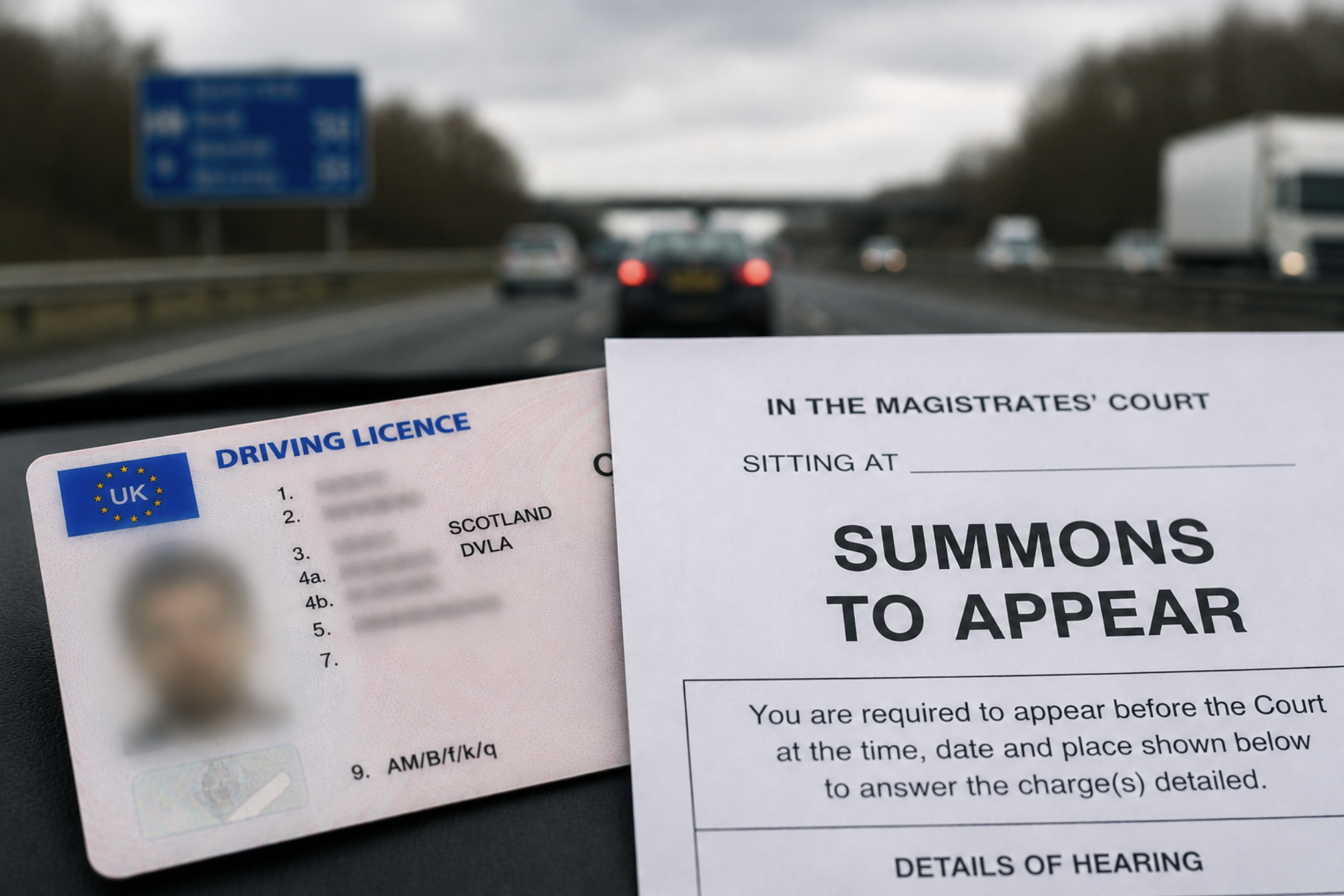
That does not mean a positive roadside result should be taken lightly. Far from it. A conviction for drug driving can mean a minimum 12-month driving ban, an unlimited fine, up to six months’ imprisonment and a criminal record. GOV.UK sets out the current penalties here.
It does mean that there is a significant difference between:
“the roadside test was positive”
and
“the prosecution has proved that my blood concentration exceeded the legal limit.”
If your livelihood depends on your driving licence, that difference is too important to ignore.
The blood evidence deserves proper scrutiny
Drug-driving cases can feel unusually technical because, unlike an allegation based primarily on somebody’s description of how a vehicle was driven, the prosecution may depend heavily on scientific evidence.
What substance was detected? What was the laboratory concentration? Which statutory limit applies? How and when was the blood obtained? What evidence accompanies the laboratory result?
There is also a separate issue for some drivers taking prescribed medicines. Scottish Government guidance confirms that the legislation contains a statutory medical defence in certain circumstances where specified drugs have been taken in accordance with healthcare advice, although that defence does not protect someone whose driving was impaired.
None of those questions can sensibly be answered by staring at the result of the roadside wipe.
They require the evidence.
Police Scotland has been expanding the use of roadside drug testing. In announcing a further rollout, it reported 2,971 drug-driving offences identified by roadside testing in 2024, compared with 1,852 in 2022.
More testing inevitably means more drivers will find themselves facing the same frightening sequence: roadside swab, arrest, blood sample, then a wait for the result.
The worst thing to do during that wait is simply assume conviction is inevitable.
Get the evidence checked before you surrender the licence
A drug-driving allegation is serious. It can threaten your licence, your job and, depending on what you do for a living, your ability to earn at all.
But the seriousness of the allegation is precisely why the evidence should be examined properly.
A positive roadside drug wipe is the beginning of that evidential process, not the end of it.
Road Traffic Defence represents motorists throughout Scotland facing drink and drug-driving allegations.
If you have tested positive at the roadside, provided a blood sample or received paperwork after the laboratory result, speak to us before deciding that there is nothing left to fight.
Call Road Traffic Defence on 0800 11 12 13 or send us the details of your case. If your licence matters, find out what the evidence actually proves before you give it up. The telephone number and contact page are both verified on the current Road Traffic Defence website.